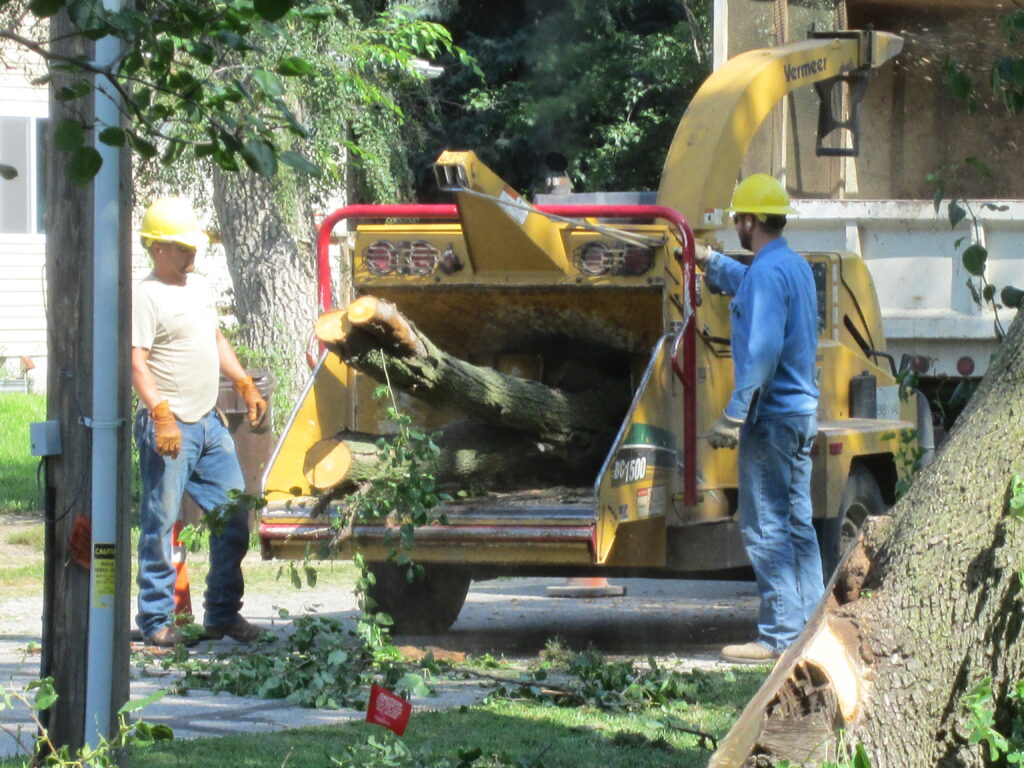
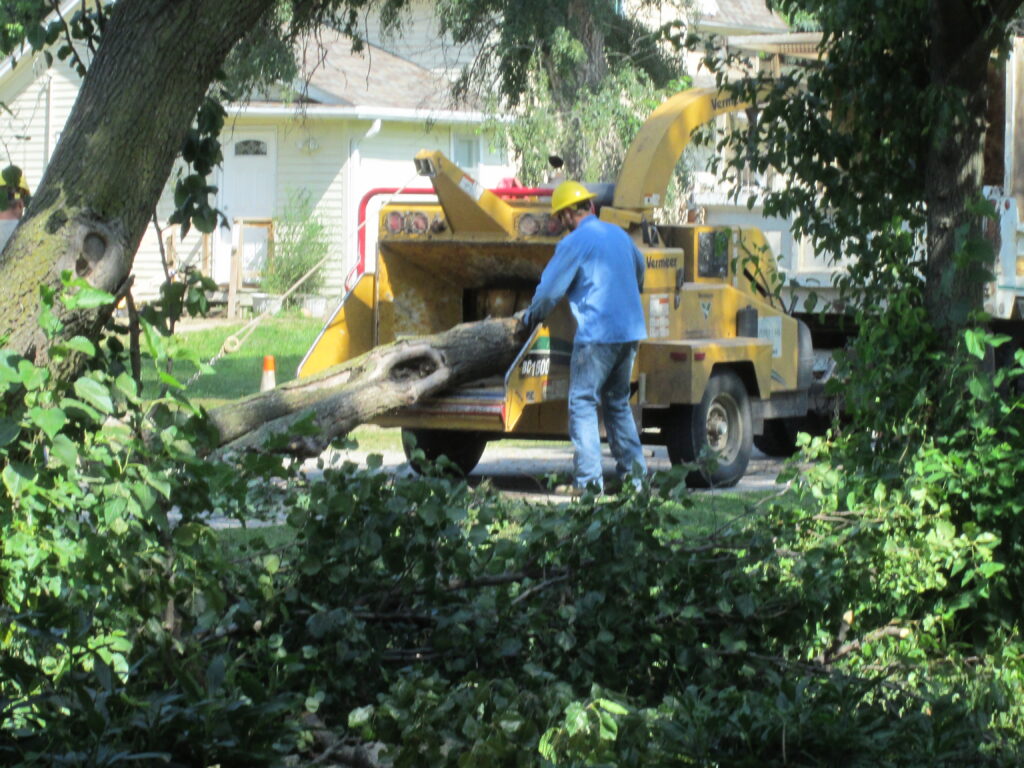
That’s why you may notice crews from Perennial or our experienced contractors working in neighborhoods throughout the year. Our crews are highly trained, following the latest industry standards to ensure the job is done safely and effectively. Their work might seem routine, but it’s anything but—it’s a proactive step that helps prevent problems before they start.
Electric utilities across the country are obligated to manage vegetation near power lines. Scheduled trimming helps remove dead or weakened limbs and keeps fast-growing trees from becoming hazards. It’s about staying one step ahead, especially as we prepare for the increasing frequency and intensity of severe weather events.
From an operations standpoint, vegetation management is one of the most critical and cost-effective tools Perennial Public Power District has in its toolbox to maintain a safe and reliable system. While it may not always be the most visible part of our work, it directly impacts outage frequency, restoration times, and overall system performance.
We’ve all seen what can happen when severe weather rolls in—strong winds, heavy ice, or sudden storms can bring down branches and, with them, power lines and poles. Trees and other vegetation are among the leading causes of unplanned outages across the United States. Over the last 5 years, trees accounted for approximately 5 percent of all of Perennial’s outages.
Safety is another primary driver. Vegetation contacting energized lines can create hazardous conditions for the public and for Perennial personnel. Downed lines caused by tree failures pose immediate dangers. By maintaining proper clearances, Perennial can reduce the likelihood of these dangerous scenarios. Controlled and planned trimming operations are far safer than emergency work, where time and pressure can increase risk.
There’s also a financial component that cannot be overlooked. While vegetation management requires ongoing investment, it is far more cost-effective than responding to repeated outages, equipment damage, and emergency callouts. Proactive trimming cycles and targeted removals can help us avoid the higher costs associated with reactive maintenance.
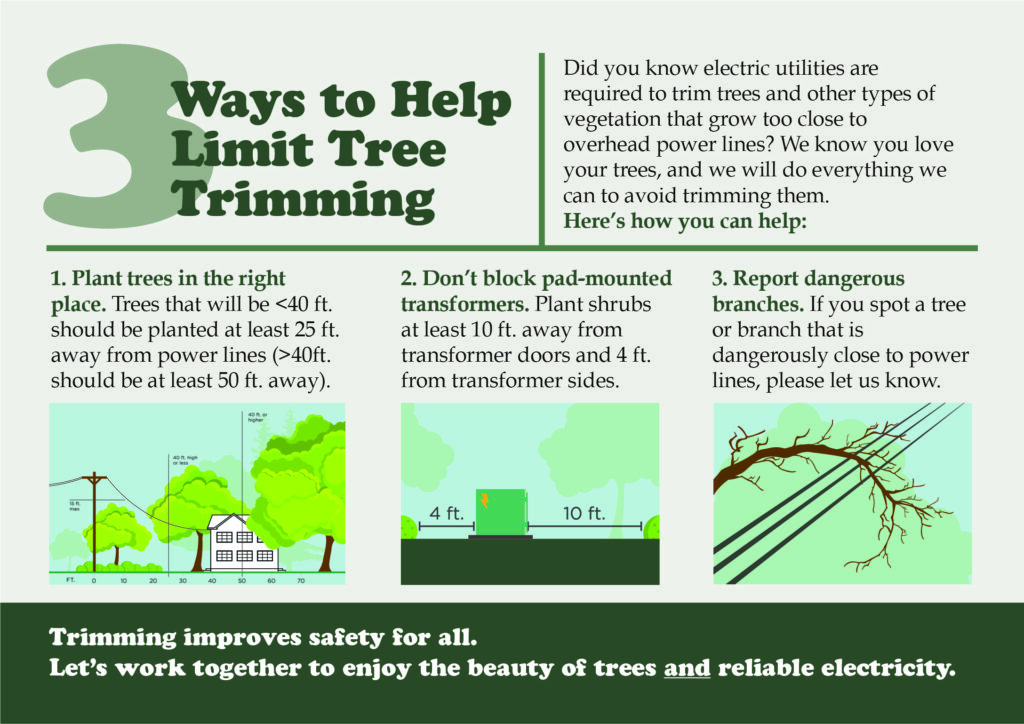
You can help, too. When planting new trees, consider their mature height and distance from nearby power lines. Trees that grow up to 40 feet should be planted at least 25 feet away from overhead lines. Larger trees—those that exceed 40 feet—should be planted at least 50 feet away. If you’re landscaping near pad-mounted transformers, keep shrubs at least 10 feet from the front and 4 feet from the sides to allow safe access.
If your neighborhood has underground lines, don’t forget to call 811 before digging. It’s a simple step that can prevent serious accidents.
In 2026, contractors are scheduled to perform vegetation maintenance in the villages of Milligan and Grafton in Fillmore County, and Perennial crews will be trimming trees in the villages of Lushton and Thayer in York County. We will also have a contractor performing work in rural York County, north of York, as part of our vegetation management program.
Ultimately, vegetation management is not just a maintenance activity – it is a strategic operational function. It requires planning and consistent execution to be effective. When done well, it operates in the background, preventing problems before they start.